
2026 TxABA Speaker Series
Thank you Behavior Live for supporting us in bringing this webinar to our members.
TxABA Members: For Free Registration and CEU
- Follow the link below
- Click on the Register Now green button
- It will prompt you to log into Behavior Live if you are not already
- Click on Look Up Membership grey button
- Enter the email address associated with your TXABA Membership & follow steps on the screen
If you exprience difficulties, please check your TxABA profile to verify that your membership is current and you are using the correct email address. If your profile says your membership is current and you still have difficulties, please email txaba@txaba.org. Please include details on what email address you used, that you checked your profile for membership status, and any error messages you received. Screenshots are helpful in assisting you more quickly.
Register before the live event to be able to access for 4 weeks afterwards (i.e., you will not be able to register after the webinar).
Upcoming Webinar: November 3, 2026 | 12:00 - 1:00 pm Central | 1 BACB CEU
Please read instructions for Behavior Live above then click here to go to Behavior Live to register
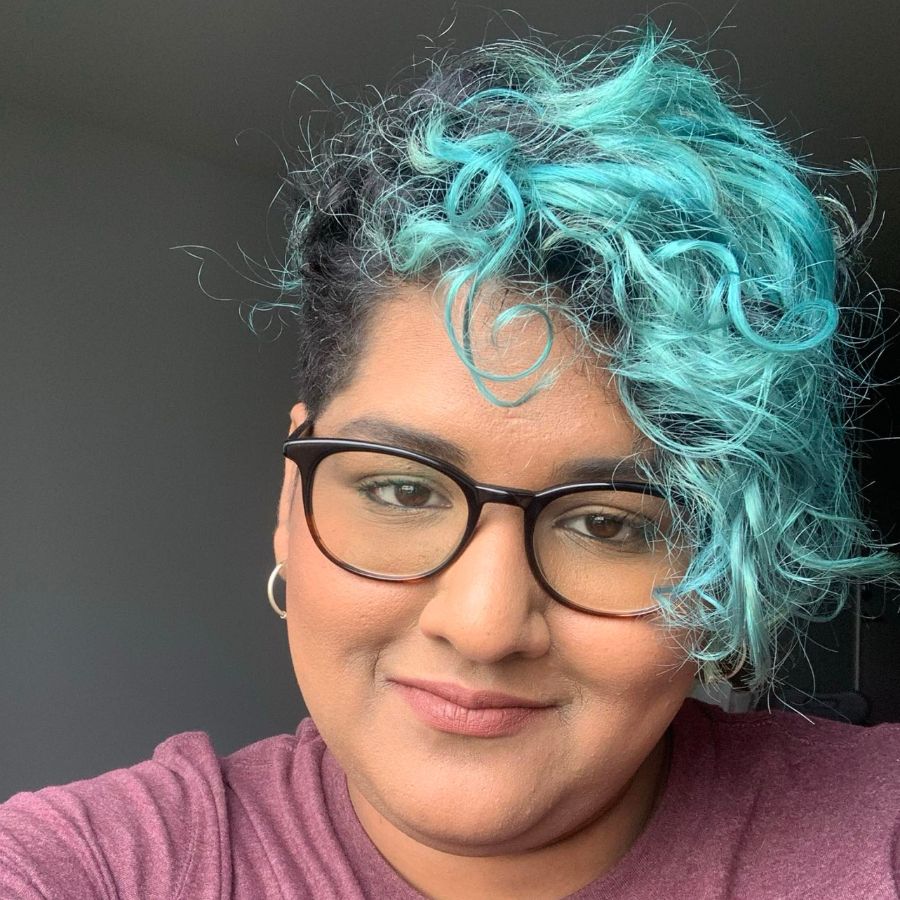
Janani Vaidya (they/them) M.S., BCBA, LBA-IL, IBA
Janani Vaidya (they/them) is a Board Certified Behavior Analyst, researcher, writer, and editor. They are a faculty member of the Applied Behavior Analysis program and a student in the PhD in Community Psychology program at National Louis University. Janani has been an affiliate researcher with the Louisiana Contextual Science Research Group and the Assent Lab since 2020. They have previously served as the Event & Research Coordinator of the Sexual Behavior: Research and Practice Special Interest Group (SBRP SIG) of the Association for Behavior Analysis International and co-chair for the Gender and Sexual Diversity Special Interest Group (GSD SIG) of the Association of Contextual Behavior Science (ACBS). Trained in radical behaviorism and contextual behaviorism, Janani's work outside of higher education includes (1) skill-building and advocacy work with disabled and/or neurodivergent adults (2) facilitating related staff training, (3) conducting research that focuses on developing theoretical frameworks for gender and sexuality, implicit bias, harm reduction, assent-based skill building and practice, disability justice and access, and equity and (4) working for and conducting sensitivity training for a variety of media and publishing outlets. You can learn more about their work at jananivaidya.com.
Title: Behavioral Community Psychology: Situating Behavior Analytic Praxis In Systems
Abstract:
Behavior analysis has developed a powerful, empirically grounded technology for behavior change to promote well-being. Throughout our field’s history, we have asserted that this technology can be harnessed to tackle social issues, and this remains a challenge across theory, research, and application. A science historically shaped by assumptions of rugged individualism encounters certain limits when applied to the social and interlocking contingencies within which all behavior occurs. This talk explores what becomes possible when behavior analysis extends its contextual commitments to engage with the multilevel systems in which behavior is always embedded, through the framework of behavioral community psychology (BCP). BCP integrates the empirically grounded technology of behavior analysis and the ecological perspective of community psychology as a multidisciplinary endeavor to address social issues (see Bogat and Jason, 2000). Grounded in social justice and prevention, BCP is concerned with the examination of individuals within context, including the groups, organizations, communities, and broader systems of which they are a part. Critically, this perspective places behavior analysts as part of the context; we are never outside the contingencies we study and intervene on. We will use this framework to discuss the challenges and generative possibilities that arise from considering bidirectional context-behavior interactions and the ongoing involvement of systems in our praxis, and how we can use BCP to engage with the multilevel systems in which behavior is embedded.
Learning Objectives. By the end of this webinar, attendees will:
- Describe the core assumptions of Behavioral Community Psychology (BCP) as a multidisciplinary approach to address systemic social issues.
- Identify at least two ways in which an individual’s repertoire interacts with multiple environmental contexts through an ecological perspective.
- Explain at least one way BCP can be applied to intervene at the group, organizational, or systems level in one’s behavior analytic professional practice.
TxABA Members: Free Registration & 1 BACB CEU
Non-Members: $15 Registration & 1 BACB CEU
Please read instructions for Behavior Live above then click here to go to Behavior Live to register
Past Webinar: January 28, 2026

Jeron Trotman, MS, BCBA, IBA
President & CEO, BTS Podcast, ABAVerzus, BMBA
Jeron Trotman is a highly skilled Board-Certified Behavior Analyst with over a decade of experience in Applied Behavior Analysis (ABA). He holds a Master of Science in Psychology with an emphasis in ABA from Purdue University and a Bachelor of Science in Sociology from the University of New Hampshire. A strong advocate for diversity and representation, Jeron is the president and founder of Black Men in Behavior Analysis (BMBA), an organization committed to enhancing the presence and leadership of Black men in the field. He also founded ABAVerzus Block Party, a groundbreaking initiative that blends education, entertainment, and celebration to foster meaningful connections in the ABA community. Additionally, he is the founder of the Behavior Technician Association (BTA), the first national professional association dedicated exclusively to advancing the careers and professional development of behavior technicians.
He further amplifies diverse voices as the host and executive producer of the Beyond the Science podcast, a platform designed to bridge the gap between science and lived experiences in ABA. He is also the author of Overcoming the 3 Biggest Challenges Facing Black Male BCBAs, which explores systemic barriers and actionable strategies for success. His work in mentorship, advocacy, and education reflects a deep commitment to community engagement and systemic change in the field. In addition to his leadership in BMBA, BTA, and ABAVerzus, Jeron serves on the Georgia Association for Behavior Analysis (GABA) Board as the co-vice president of Diversity, Equity, and Inclusion (DEI), where he works to promote inclusive practices and equitable opportunities within the profession.
Jeron is a member of several professional organizations, including the Association for Professional Behavior Analysts (APBA) and the Georgia Association for Behavior Analysis (GABA). His work focuses on empowering the next generation of clinicians, driving innovation, and shaping the future of ABA. Through these initiatives, he has helped thousands of behavior professionals strengthen their skills, build community, and advance culturally responsive care. Currently residing in Atlanta, GA, Jeron continues to lead transformative efforts that promote diversity, education, and systemic change in the field. Above all, he is driven by a passion to create spaces where professionals and communities can thrive together.
Click here to learn more about Jeron TrotmanTitle: Mentorship That Matters: Reigniting Engagement, Retention, and Leadership in ABA
Abstract:
Mentorship in ABA is more than supervision, it is one of the most powerful drivers of connection, retention, professional identity, and quality of care in our field. At a time when clinicians are experiencing burnout, decreasing engagement, and disconnection from professional communities, intentional mentorship can serve as a stabilizing and inspiring force.
This presentation will explore mentorship as a meaningful behavioral process rather than a symbolic relationship, examining how it functions to build belonging, strengthen confidence, develop future leaders, and sustain commitment to the science and community of ABA. Drawing from real-world mentorship models, leadership experiences, and community-building initiatives, this session will provide practical strategies for organizations, supervisors, and professionals at all levels to design mentorship systems that truly support people, not just performance.
Participants will leave with actionable tools to cultivate relationships that reinforce growth, protect against burnout, and reengage clinicians in purposeful, values-driven work.
Learning Objectives: By the end of this webinar, participants will be able to
- Differentiate mentorship from supervision and management by identifying key behavioral functions of effective mentorship relationships.
- Identify at least three mentorship practices that meaningfully support engagement, retention, confidence, and development of ABA professionals.
- Develop an initial action plan to integrate intentional mentorship strategies into their organization, supervisory practices, or professional community.
TxABA Members: Free Registration & 1 BACB CEU
Non-Members: $15 Registration & 1 BACB CEU
Past Webinar: February 26, 2026

Merrill Winston, PhD, BCBA-D
Dr. Winston is a Behavior Analyst who has worked in the field of Developmental Disabilities for over 30 years. He studied behavior analysis as an undergraduate at the University of Florida and received his Ph.D. in behavior analysis at Auburn University. Dr. Winston is a Board Certified Behavior Analyst with specialties in developmental disabilities & behavior disorders and the use of restraint and seclusion. He specializes in the analysis and treatment of severe behavior disorders with special populations. His range of treatment experience includes feeding disorders, self-injury, severe aggression, basic language acquisition, and skill acquisition problems. Dr. Winston is a popular speaker at conferences and conducts presentations on a wide variety of topics in behavior analysis including psychotropic medication usage, mental illness, exceptional student education, assessment and treatment of behavior problems, IEP goal selection and measurement, and a variety of conceptual issues as they relate to conducting behavior analysis. Dr. Winston works with children and adults, both verbal and nonverbal, and has worked in a variety of settings including private homes, group homes, large institutions, secured facilities, schools, private clinics and day-treatment programs. Dr. Winston is also an experienced expert witness for litigation involving the use of restraint/seclusion and has served as an expert in over 25 cases on the side of both plaintiffs and defendants.
Click here to learn more about Merrill WinstonTitle: Physical Prompting: What is it and when does it become something more?
Abstract:
Physical prompting is not typically well defined in applied settings and can occur with a range of force that can vary greatly, but when the individual begins to resist, everything can change rapidly. What was a mild physical prompt is now a “vigorous” physical prompt that is beginning to look and function like restraint. Individuals may resist physical guidance whether it’s to discourage them from hitting or to encourage them to remain seated. This presentation will focus on differences between physical prompts and restraint as well as factors that cause parents/guardians and the general public to deem restraints acceptable or unacceptable. Other topics will include 1) an examination of the concepts of accommodation and discrimination as they apply to individuals with special needs, 2) A clear, functional definition of restraint for parents, 3) The 3 types of control that are used with all people and WHY even mild restraint must sometimes be used as a form of control, and 4) the use of procedures that are definitely “against the will” of the child and may even result in a momentary restriction of the individual’s rights.
Learning Objectives: By the end of this webinar,
- Participants will be able to explain the differences between restraint and physical prompting, and how physical prompting can easily turn into restraint.
- Participants will be able to list the 3 types of control and how to explain to parents how these forms of control are used with children as they develop
- Participants will be able to explain what is meant by “discrepant treatment” of those with special needs and how our biases determine how we label any discrepant treatment we see
- Participants will be able to explain how the context of restraint is typically more important than the restraint itself in determining acceptability
- Participants will be able to explain the perception of malice and incompetence when it comes to restraint use and how this perception can prevent parental cooperation
TxABA Members: Free Registration & 1 BACB CEU
Non-Members: $15 Registration & 1 BACB CEU
Past Webinar: June 25, 2026 | 11:00 am - 12:00 pm Central | 1 BACB CEU

Nasiah Cirincione-Ulezi, Ed.D., BCBA, LBA
Dr. Nasiah Cirincione-Ulezi is a Board Certified Behavior Analyst with a doctorate in education from Loyola University Chicago. She holds a master’s degree in special education from the University of Illinois Chicago and is in the final stages of completing the requirements for a master’s degree in Marriage and Family Therapy.
She is also a graduate of the Irving B. Harris Infant Studies Program at Erikson Institute, where she earned a specialization in infant mental health. In addition to her BCBA credential, she is an Illinois licensed special education teacher and an Illinois Early Intervention (birth through three) provider.
Dr. Cirincione-Ulezi has served as a special educator, clinician, educational administrator, and professor of special education. Her clinical experience spans infancy through adulthood and reflects a deep commitment to supporting individuals and families across the lifespan.
She is the founder and CEO of ACT Soulfully and serves on the advisory boards of Mosaic Pediatric Therapy and NEXT for AUTISM. She is also a board member of the Association for Behavior Analysis International Affiliate Chapters Board.
A champion for human dignity, liberation, and self-expression, Dr. Cirincione-Ulezi is deeply committed to using her knowledge, skills, and lived experience, together with the science of applied behavior analysis, to support others in ways that foster meaningful and lasting positive change.
Title: The Clinical Power of Listening: Strengthening Connection, Clarity, Care, and Outcomes
Abstract:
Listening is often treated as a passive part of communication, yet it is an active behavioral and relational process that shapes what is heard, how messages are interpreted, and how relationships develop. Skinner’s (1957) analysis of verbal behavior reminds us that communication involves the interrelated behavior of both speaker and listener. For practitioners in clinical, educational, supervisory, and human-service settings, the quality of listening can influence trust, collaboration, assessment, intervention planning, feedback, and ultimately clinical outcomes.
This 60-minute webinar invites practitioners to examine listening as a clinical skill that can be observed, reflected upon, and strengthened. Participants will explore how their histories, assumptions, emotional states, professional roles, and service-system pressures influence what they notice, miss, interpret, or respond to in communication. Through brief teaching, guided reflection, and interactive discussion, participants will identify listening patterns that may either support or constrain effective practice, particularly under pressure, during disagreement, when giving or receiving feedback, and when working across differences.Participants will leave with practical strategies for strengthening the quality of their listening in everyday professional interactions, creating stronger relational conditions for clarity, collaboration, dignity, meaningful connection, and more responsive professional practice.
Learning Objectives:
- Participants will identify the distinction between hearing and listening in professional communication.
- Participants will describe behavioral strategies that set the occasion for more intentional listening.
- Participants will complete a reflective exercise to identify patterns in their own listening.
TxABA Members: Free Registration & 1 BACB CEU
Non-Members: $15 Registration & 1 BACB CEU
Past Webinar: July 8, 2026 | 3:00 - 4:00 pm Central | 1 BACB CEU
Please read instructions for Behavior Live above then click here to go to Behavior Live to register

Amarie Carnett, Ph.D., BCBA-D
Dr. Carnett is a Senior Lecturer in Psychology at the University of Waikato, New Zealand, Director of the Behaviour Analysis Programme, and a Research Affiliate at the University of Texas at San Antonio. She is a doctoral-level Board Certified Behaviour Analyst (BCBA-D). Dr. Carnett initially obtained her bachelors degree in Human Rights and Political Science at the University of North Texas. She later went on to work in educational settings to support learners with developmental disabilities, which led her to pursue her masters degree in behaviour analysis at Texas State University. She completed her doctorate degree in Educational Psychology, specializing in behaviour analysis and communication interventions at Victoria University of Wellington. She has over 15 years of experience working in the field of behaviour analysis and developmental disabilities. Her research is focused on developing interventions to help individuals develop autonomy within their environments and increase their overall quality of life. She believes this best achieved by interventions that target issues associated to generalization of skills, as well as ensuring social significance through stakeholder participation. Her research interest can be classified into two overlapping categories: communication interventions and adaptive functioning. Dr. Carnett has 70 peer-reviewed journal articles and published book chapters. Her collaborative research extends internationally with current projects at the University of Texas at San Antonio and Georgia State University Dr. Carnett also serves her research community and professional community by holing several leadership roles (e.g., journal reviewer, special issue editor, international conference convenor, ethics committee member). She is an Associate Editor of Advances in Neurodevelopmental Disabilities and the Journal of Developmental and Physical Disabilities. Since returning to New Zealand, Dr. Carnett has worked with colleagues to help develop the Socieity of Behaviour Analysis Aotearoa, New Zealand, an organization aimed promoting professional practice standard for behaviour analysis.

Christopher Tullis, Ph.D., BCBA-D
Dr. Christopher Tullis is an Associate Professor of Behavior Analysis at Georgia State University in the Department of Learning Sciences. He earned his Ph.D. in Special Education and Applied Behavior Analysis from THE Ohio State University, a master’s degree from Georgia State University in Educational Psychology, and is a Board Certified Behavior Analyst-Doctoral. In addition to his faculty role, he serves as a Clinical Advisor for Propel Autism, an Atlanta-based behavior analytic service provider. Dr. Tullis has over two decades experience in behavior analysis with roles that include direct implementation of programming, research, and consultation across clinic and school-based settings. His research focuses the quality implementation of behavior analytic teaching procedures that result in emergent behavior and the assessment of preference across varied contexts. He has published over 30 book chapters and peer-reviewed publications, many of which have heavy student involvement in real-world clinical contexts. Dr. Tullis also serves on the editorial boards of Focus on Autism and other Developmental Disabilities and the Journal of Developmental and Physical Disabilities, and holds an Associate Editor position at the Review Journal of Autism and Developmental Disorders.
Title: An assent framework for people with intellectual and developmental disabilities and complex communication needs
Abstract:
In both research and practice, gaining assent from participants is an ethical imperative in applied behavior analysis. Recent guidance for including assent-based procedures has been provided in the literature (Breaux & Smith, 2023). However, limitations for decision-making when working with individuals who have developmental disabilities and complex communication needs (CCN) may require further guidance given the range of different considerations, such as use and proficiency with an augmentative and alternative communication system (AAC). This presentation provides an overview of considerations for individuals with greater support needs, a framework for evaluating assent in clinical practice, suggestions for measurement, and suggestions for future research.
Learning Objectives: by the end of this presentation, participants will be able to:
- Describe at least three challenges associated with obtaining and evaluating assent from individuals with intellectual and developmental disabilities who have complex communication needs (CCN).
- Identify the major components of the proposed assent framework, including risk assessment, communication preassessment, choice-making opportunities, preference evaluation, and behavioral indicators of assent and dissent.
- Identify key considerations related to provision of choice, behavioral indicators of assent, and culture.
TxABA Members: Free Registration & 1 BACB CEU
Non-Members: $15 Registration & 1 BACB CEU
Past Webinar: September 23, 2026 | 11:00 am - 12:00 pm Central | 1 ETHICS BACB CEU

Heather Forbes, Ph.D., BCBA-D, CCC-SLP
Heather Forbes, Ph.D., BCBA-D, CCC-SLP is an Assistant Professor of Communication Sciences and Disorders at West Chester University. She is a dually credentialed speech-language pathologist and doctoral-level board certified behavior analyst. Her research focuses on interventions to improve communication for children with autism and other developmental disabilities, with a particular focus on evidence-based practice, AAC interventions, and collaborative service delivery. Heather has previously presented on topics related to evidence-based speech and language intervention, pseudoscientific and poorly supported interventions, interprofessional collaboration, and communication instruction by parents.
Title: The Gestalt Gap: Evidence, Ethics, and the Rush to Adopt New Language Frameworks
Abstract:
Gestalt language processing (GLP) and Natural Language Acquisition (NLA) have gained significant traction among professionals working with autistic children. Yet, these frameworks have outpaced the empirical research needed to support their widespread clinical adoption. This session will critically examine GLP/NLA through scientific, pseudoscientific, and evidence-based practice lenses. The presenter will discuss the ethical implications of implementing clinical procedures based primarily on anecdotal evidence and will provide attendees with practical strategies for critically appraising claims made by GLP/NLA proponents.
Learning Objectives:
- Identify characteristics that distinguish scientific interventions from pseudoscientific practices for autistic children
- Identify at least two different definitions of evidence-based practice
- Describe ethical concerns associated with implementing clinical procedures based in GLP/NLA frameworks
TxABA Members: Free Registration & 1 BACB CEU
Non-Members: $15 Registration & 1 BACB CEU